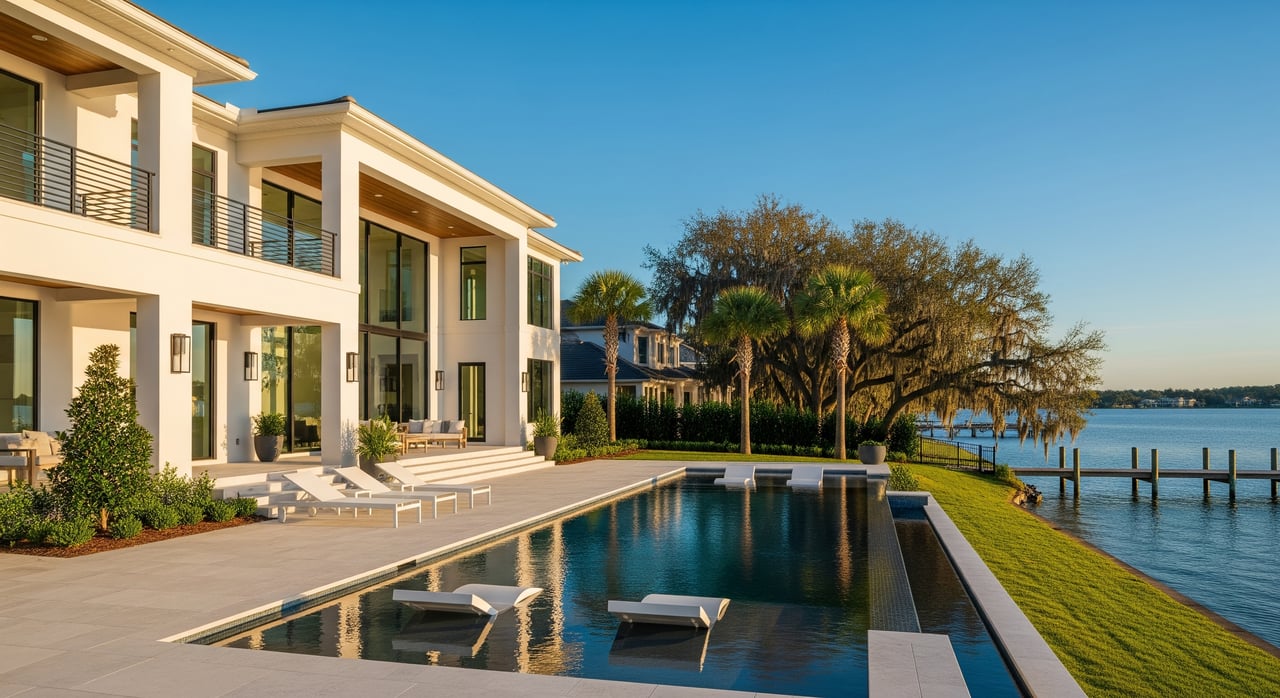
Thinking about a new construction home in Windermere but not sure where to start? You are not alone. Between lakefront rules, HOA design reviews, and build timelines, there is a lot to weigh before you sign a contract. This quick guide walks you through the local options, timelines, selections, financing, warranties, and Windermere‑specific regulations so you can move forward with confidence. Let’s dive in.
New construction options in Windermere
Windermere offers several paths to a new home, from quick‑move opportunities to bespoke estates.
- Spec or inventory homes: Built without a specific buyer and often closest to move‑in. If the home is near completion, you can close in weeks rather than months.
- Semi‑custom homes: You choose a plan and make defined selections and upgrades. Timelines are moderate and you get meaningful design input.
- Fully custom homes: A unique plan created for a specific lot. Expect the longest timelines due to design, permitting, and more complex site work, especially on lakefront.
- Infill lots vs. gated communities: Windermere has both. Gated neighborhoods often have stricter architectural review and landscaping rules. Lake access and dock rights can add cost and coordination.
Local context: Windermere is known for gated living, estate homes, and the Butler Chain of Lakes. Premium lots with lake access or private dock potential usually carry higher prices and are governed by HOA or architectural review committees.
Build timeline and key stages
Understanding the sequence helps you plan decisions and inspections.
From contract to keys
- Contract and deposit
- Permitting and site work
- Shell and systems (framing, roof, windows, mechanical, electrical, plumbing)
- Pre‑drywall inspection
- Finish stage (drywall, cabinets, flooring, fixtures)
- Final inspection and Certificate of Occupancy
- Post‑closing punch list and warranty support
Timelines you can expect
- Spec or inventory home: about 1 to 6 months, depending on construction stage at contract.
- Semi‑custom home: typically 6 to 12 months, driven by permits and design selections.
- Fully custom home: commonly 9 to 18 months or longer, especially for lakefront approvals.
What affects timing:
- Lot conditions, soils, and elevation
- Stormwater and environmental approvals for lakefront
- HOA or architectural review cycles
- Builder backlog and trade availability
- Permit office processing times
Selections, upgrades, and codes
Your selections and change management plan can protect your budget and schedule.
- Design windows: Builders set deadlines for structural and finish selections. Missing them can default you to standard finishes or trigger change orders.
- Allowances: Clarify what is included for cabinets, countertops, and flooring, and how overages are priced.
- Change orders: Ask about fees, markups, pricing method, and turnaround time.
- Energy and storm resilience: Florida code supports wind resistance and efficiency. Impact windows, reinforced roofing, and insulation levels may be required or offered.
Financing your new home
Financing depends on build type and stage.
- Conventional mortgage: Common for near‑complete inventory homes that can close after the Certificate of Occupancy.
- Construction or construction‑to‑permanent: Popular for semi‑custom and custom builds, with lender draws at milestones and conversion to a permanent loan at completion.
- FHA/VA options: Possible when the builder and lender meet program rules. Availability varies.
- Lender requirements: Expect completed‑value appraisals or staged inspections and a Certificate of Occupancy prior to funding.
Warranties and inspections
Strong due diligence now can prevent headaches later.
- Typical warranty structure: 1 year for workmanship, 2 years for systems, 10 years for major structural. Coverage and providers vary by builder.
- Know the exclusions: Cosmetic items, normal settling, and routine maintenance are often excluded. Ask who underwrites the structural warranty and how claims are handled.
- Inspections: Schedule a pre‑drywall inspection, a detailed final walk‑through with a punch list, and a re‑inspection before closing. For unique foundations or lakefront builds, consider a structural engineer review.
Windermere rules and site checks
Building near the Butler Chain brings unique permitting steps and due diligence items.
Flood zones and lake risk
Many Windermere properties sit on or near lakes, which can impact insurance and build elevations. Review FEMA maps and request an elevation certificate for any waterfront lot. Start with the FEMA Flood Map Service Center.
Docks and shoreline permits
Dock, seawall, and lift projects may require approvals at the town, county, and possibly state level. Confirm the permitting path and HOA restrictions before you design. The Town of Windermere and the Orange County Building Division can clarify requirements.
HOA and design review
Gated communities commonly enforce architectural guidelines, set‑backs, exterior materials, landscaping standards, and color palettes. Obtain CC&Rs and ARC rules early. These documents shape what you build and what you can modify later, including docks and outdoor structures.
Permits and inspections
Permitting authority can be the Town of Windermere or Orange County, depending on location and project scope. Permit offices set inspection cadence and timelines, which influence your schedule. Check the Town of Windermere and the Orange County Building Division for current processes.
Utilities and environment
Verify water and sewer availability, impact fees, and whether the lot uses septic. Tree preservation, stormwater management, wetlands, and shoreline stability can add time and cost to a build plan.
Buyer checklist and questions
Use this list to organize your due diligence before signing.
- Builder profile: License number, years in business, recent local projects, references, and any claim history. Verify licenses with the Florida DBPR.
- Contract clarity: Included features, allowances, upgrade pricing method, construction schedule, delay clauses, dispute resolution, and stated warranty process.
- Lot disclosures: Survey, flood zone and elevation certificate, easements, CC&Rs, and setbacks. Check legal details with the Orange County Property Appraiser.
- Permits and approvals: Who pulls permits, expected timelines, and who bears delay risk.
- Financials: Deposit schedule, escrow handling, construction draws, lender conditions, and closing timing.
- Warranty documents: Full terms, provider name, claim process, and typical response times.
- HOA package: CC&Rs, ARC guidelines, HOA fees, transfer fees, and dock or lake rules.
- Market context: Ask your agent for recent neighborhood sales and inventory trends. Public updates often appear via the Orlando Regional REALTOR Association.
Key questions to ask:
- What warranty do you provide and who underwrites it?
- What is included in the base price versus allowances and upgrades?
- What timeline do you anticipate and what typically causes delays here?
- How are change orders priced and approved, and how fast are they completed?
- Who handles permitting and inspections, and what are current permit lead times?
- For lakefront lots: Who obtains dock permits, and what do the HOA and county allow?
Work with a design‑led builder
If you want a streamlined process, look for a builder that integrates architecture, interiors, construction, and sales under one team. A single point of contact helps you balance design intent with budget and schedule, especially when coordinating HOA reviews, permit steps, and lakefront considerations. If you are exploring spec inventory or a custom consultation in Windermere, connect with the team at Davila Custom Homes. Book a Tour and see how a vertically integrated, design‑forward approach can simplify your next move.
FAQs
How long does a new home in Windermere take to build?
- Spec homes are often 1 to 6 months, semi‑custom builds are about 6 to 12 months, and fully custom homes often run 9 to 18 months or more depending on permits and lot conditions.
Do I need flood insurance for a Windermere lakefront lot?
- It depends on the FEMA flood zone and your lender’s policy; review the FEMA map and an elevation certificate to confirm requirements.
What warranties do new construction homes usually include?
- Many builders follow a 1 year workmanship, 2 years systems, and 10 years structural model, but you should confirm the provider and coverage details in writing.
Can I tour the home during construction and hire my own inspector?
- Usually yes, per builder policy, and independent inspections at pre‑drywall and final walk‑through stages are recommended.
How much can I negotiate on new construction in Windermere?
- Negotiation often centers on lot premiums, upgrade credits, and closing incentives; specifics depend on market conditions and build stage.
What financing options work for new builds?
- Conventional loans are common for nearly complete spec homes, while construction and construction‑to‑permanent loans are typical for semi‑custom and custom projects; some FHA/VA options may be available if builder and lender are approved.